TL;DR — Quick Answer
- Both brands are excellent. There is no clear loser in this comparison — it comes down to priorities.
- Choose Daikin if you prioritise quiet operation, strong inverter efficiency, and a wide product range.
- Choose Mitsubishi Electric if you prioritise long-term reliability, a strong Singapore service network, and consistent quality across models.
- For most standard HDB homes, either brand at equivalent specifications will give you essentially the same experience.
Daikin and Mitsubishi Electric are the two most popular aircon brands in Singapore — and they are popular for good reason. Both are Japanese brands with decades of engineering heritage and strong track records in tropical climates. Ask 10 technicians which is better and you will likely get 10 different answers depending on what they prioritise.
We install and service both brands regularly across Singapore HDB flats, condos, and commercial spaces. Here is our honest assessment of how they compare on the factors that actually matter for Singapore homeowners.
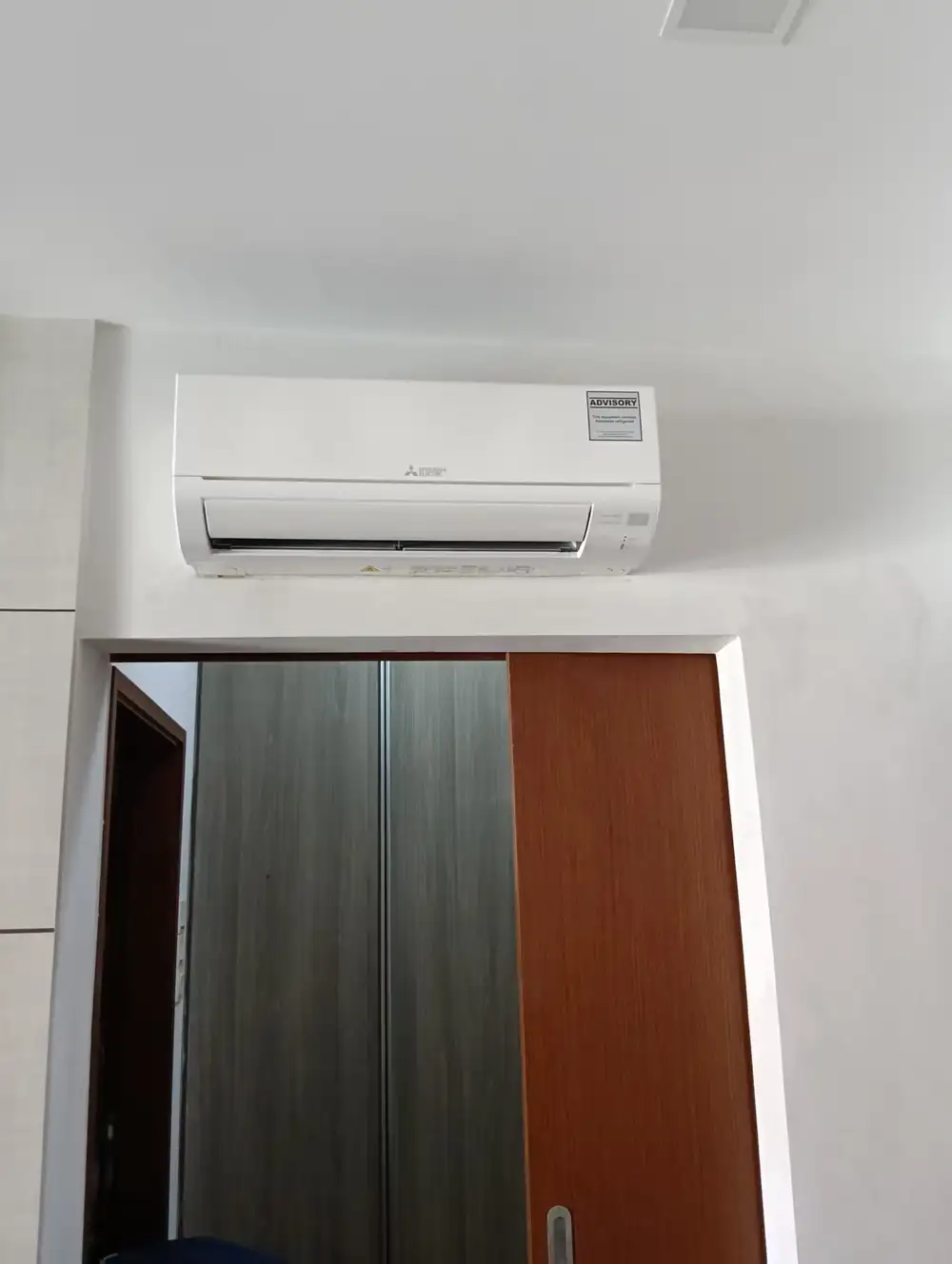
Cooling Performance
For standard residential use in Singapore — HDB bedrooms, living rooms, typical room sizes — both brands deliver excellent cooling performance at equivalent capacity ratings. The difference in day-to-day cooling feel between a Daikin and Mitsubishi unit of the same horsepower in the same-sized room is negligible for most people.
Where slight differences emerge:
- Daikin is often praised for more even airflow distribution, particularly with the louvre design on some models.
- Mitsubishi Electric is known for strong, consistent cooling that holds temperature well even in larger open-plan spaces.
Energy Efficiency
Both brands offer NEA 5-tick inverter models — the highest efficiency rating available in Singapore. At equivalent tick ratings, real-world energy consumption between the two brands is essentially the same.
The NEA energy label system makes this comparison straightforward: compare the tick rating and the listed annual energy consumption, not just the brand name. A Daikin 5-tick model and a Mitsubishi Electric 5-tick model of the same capacity will cost you approximately the same to run.
Our recommendation: always buy an inverter model with at least 4 ticks. The running cost difference over 10 years between a 3-tick and 5-tick unit significantly outweighs the upfront price difference.
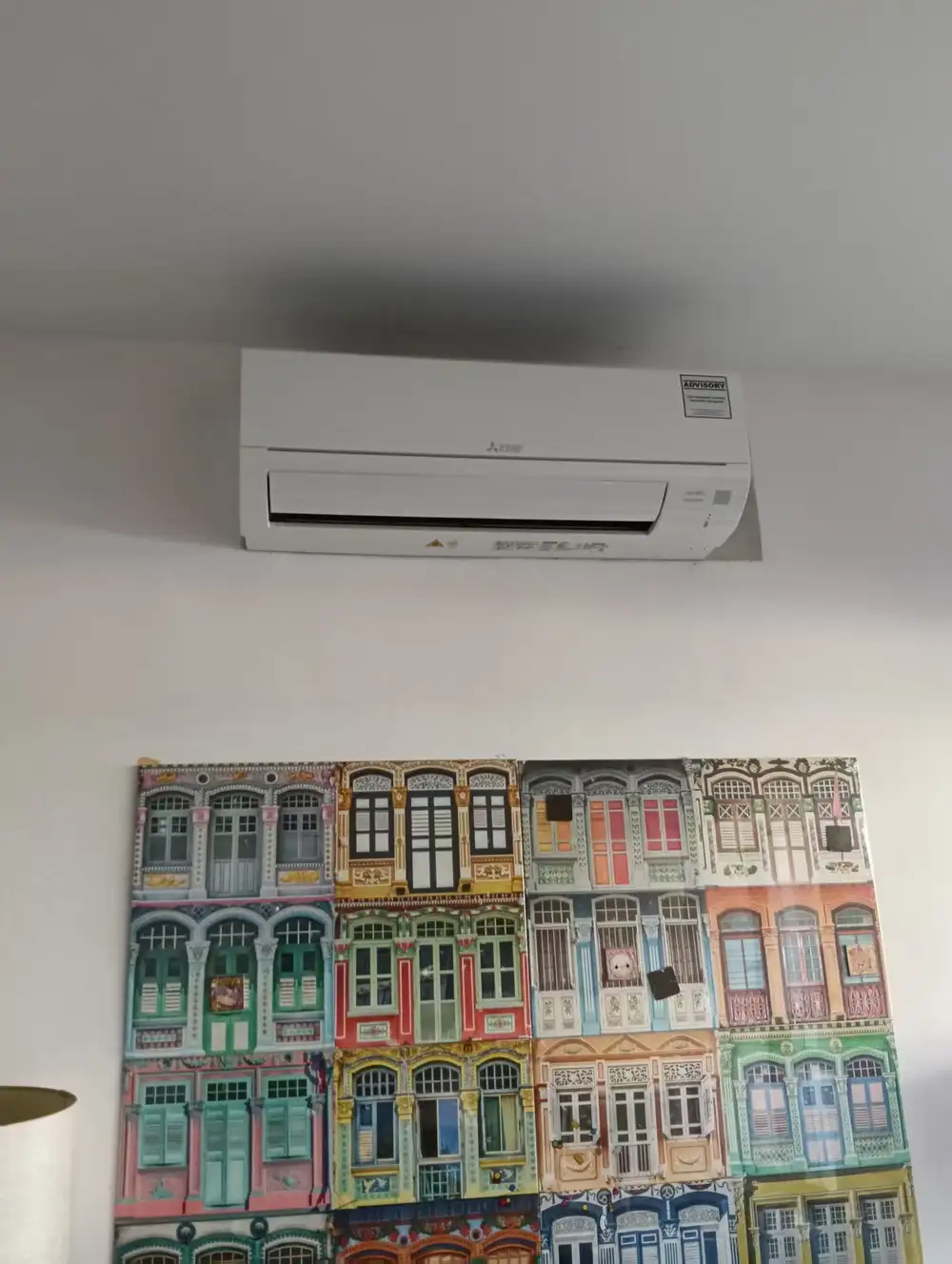
Noise Level
This is where Daikin has historically held an edge. Daikin's indoor units — particularly the Smile and iSmile series — are among the quietest available in Singapore. For light sleepers or those particularly sensitive to noise, this can be a meaningful differentiator.
Mitsubishi Electric's indoor units are also quiet, but Daikin consistently ranks slightly better in independent noise testing at equivalent capacity. If you are replacing an aircon specifically because the old one was too noisy, Daikin's quiet series is worth a look.
Price Comparison
| System Type | Daikin (approx.) | Mitsubishi Electric (approx.) |
|---|---|---|
| System 2 with installation | $2,400 – $3,000 | $2,500 – $3,200 |
| System 3 with installation | $3,200 – $3,900 | $3,300 – $4,000 |
| System 4 with installation | $4,200 – $5,000 | $4,300 – $5,200 |
Mitsubishi Electric tends to be marginally more expensive at the higher-end models, but the difference is not dramatic. Both brands have entry-level and premium options. The price you pay also depends significantly on your installer — get quotes from a few licensed companies before committing.
Reliability and Longevity
Both brands have strong reliability records in Singapore when properly maintained. Based on our service history across hundreds of units of both brands:
- Both brands regularly reach 10 to 15 years of reliable operation with quarterly servicing.
- The most common fault in older Daikin units is the PCB (circuit board) — expensive to replace but not frequent before 8 years.
- Mitsubishi Electric compressors are widely regarded as particularly robust — we rarely see compressor failures in well-serviced Mitsubishi units.
- Fan motor issues appear in both brands at similar rates in older units.
💡 The Real Factor in Longevity
The single biggest predictor of how long any aircon lasts is servicing frequency, not brand. A Daikin serviced every 3 months will outlast a Mitsubishi serviced once a year, and vice versa. Choose the brand you prefer, then service it properly.
After-Sales Support in Singapore
Both brands have established service centres in Singapore and authorised service partners throughout the island. For most repair scenarios, either brand can be serviced quickly by any licensed aircon company, including K2L Aircon.
Specific parts availability:
- Daikin: Parts for most current and recent models are readily available in Singapore, typically within 1 to 3 days for common components.
- Mitsubishi Electric: Similarly strong parts availability. The brand's long-standing presence in Singapore means parts for older models are also generally accessible.
So Which Should You Choose for HDB?
Choose Daikin if you want:
- The quietest possible indoor unit
- Slight edge in airflow distribution
- Marginally lower unit price at entry level
- Wide range of models and series
Choose Mitsubishi Electric if you want:
- Particularly robust compressor track record
- Consistent quality across the entire product range
- Strong brand recognition for resale
- Slightly better at holding temp in larger rooms
If you genuinely cannot decide, tell our team your room sizes, usage pattern, and budget. We will recommend the specific model — not just the brand — that makes the most sense for your flat. See our installation page for full details, or WhatsApp us for a free recommendation.
"In ten years of installing and servicing both brands across Singapore HDB flats, I have never had a customer genuinely regret either choice — as long as they service it regularly. The brand decision is less important than people think."